What Are Book Margins?
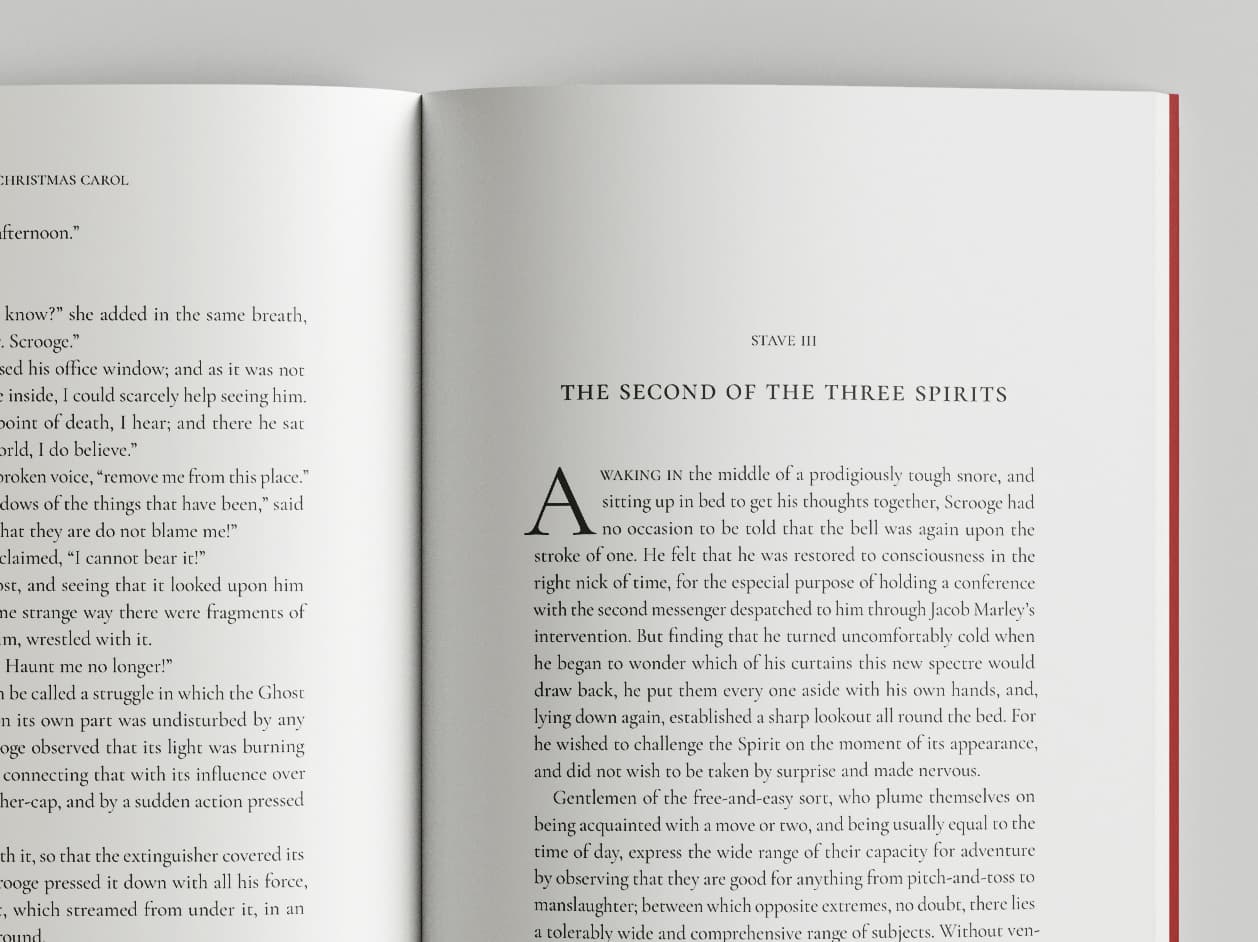
Book margins are the blank spaces surrounding the text on a page. They help define the type area, the space allocated to the text within the page layout.
Choosing the right margins involves several factors, including the book's trim size (its width and height) and its total page count.
A 100,000-word novel, for example, will have different requirements than a 30,000-word novella. Taking these factors into account helps us choose an appropriate trim size and determine the right margin widths, resulting in a balanced layout and a comfortable reading experience.
What Are Book Margins For?
Margins are more than just blank spaces around the text. They help define the type area and create a balanced, visually appealing page. Well-chosen margins prevent the text from feeling cramped or too spread out, making the book more comfortable to read.
Margins also affect line length, which is an important consideration in book design. As a general guideline, lines in fiction are often kept between 60 and 75 characters, including spaces. However, this is not a hard-and-fast rule. The ideal line length also depends on the typeface, font size, and page dimensions.
Lines that are too long can make it difficult for readers to follow the text, while lines that are too short can disrupt the reading flow and force the eye to jump frequently from one line to the next. In books for younger readers, shorter lines may be appropriate, particularly when larger type is used to improve readability.
Choosing the right margins therefore requires consideration of all these factors, along with the book's trim size and total page count, to achieve a balanced and functional layout.
Choosing the Right Margins
Choosing margins is not an arbitrary decision. It requires careful consideration of several factors.
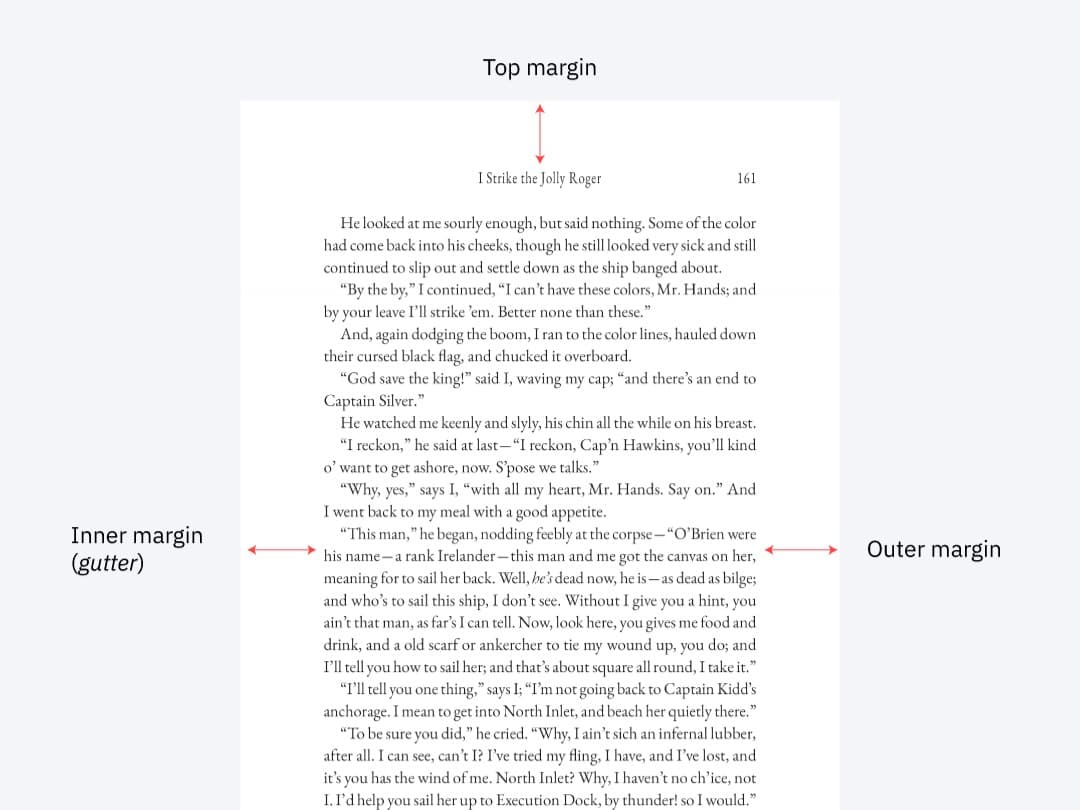
The inside margin, also known as the gutter, must be wide enough to prevent the text from disappearing into the spine, where it can become difficult to read. Its width depends largely on the book's thickness: books with more pages may require a wider gutter, particularly when dealing with thicker volumes.
The outside margin, on the other hand, should leave enough room for readers to hold the book without covering the text with their thumb. Although a margin of 0.24 inches (approximately 6.1 mm) may meet Amazon KDP's minimum requirements for certain print formats, a more generous margin is generally preferable. An outside margin of at least half an inch (1.27 cm) is a good starting point for creating a more open, comfortable page layout.
The top and bottom margins help balance the page composition and can accommodate additional elements, such as running heads and page numbers.
Running heads are optional elements that may display the author's name, the book title, or the current chapter title. In novels, for example, the author's name may appear on left-hand pages and the chapter title on right-hand pages. Other arrangements are also possible, depending on the design.
Page numbers can be placed at the bottom center of the page or toward the outside edge. Alternatively, they can appear at the top of the page, either centered or aligned toward the outside edge. The choice depends on the overall design and the conventions being followed.
As for proportions, the bottom margin is often slightly larger than the top margin. This helps create visual stability and prevents the text from appearing to sit too low on the page. It is not a strict rule, but a design choice that can contribute to a more balanced layout.
Conclusion
Choosing the right margins is an important step in creating a professional book layout and ensuring a comfortable reading experience. There are no universal measurements that work for every book. Trim size, page count, typeface, and line length are all factors that need to be considered.
The goal is to strike the right balance between text and white space while accounting for the binding and maintaining good readability. For this reason, margins should always be evaluated as part of the overall page design rather than as isolated measurements.
Good book design is often a matter of getting these details right. Well-proportioned margins help make a book more balanced, readable, and enjoyable to browse.